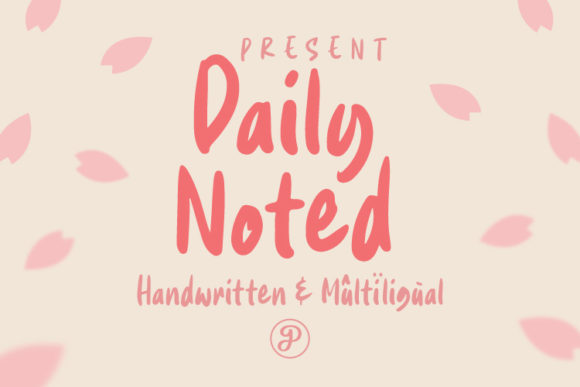
Daily Noted: The Fresh Display Font for Modern Creators
There's something special about a font that feels both familiar and fresh—the kind that makes you pause mid-scroll because it just works. Daily Noted is exactly that typeface. It's a relaxed display font with enough personality to stand out, yet enough versatility to fit into a surprising range of projects. Whether you're designing a book cover, crafting social media graphics, or putting together merchandise for your small business, this font brings a warmth and approachability that's hard to fake with overly rigid typefaces.
Why a Relaxed Display Font Changes Everything
Display fonts get a bad reputation sometimes. People assume they're only good for headlines or that they sacrifice readability for style. But the best ones—like Daily Noted—strike a balance. They carry visual weight without feeling heavy. They express personality without overwhelming the rest of your design. That's the sweet spot, and it's where this particular typeface lives.
What makes Daily Noted visually appealing is its casual confidence. The letterforms have a hand-drawn quality, but not the kind that looks sloppy or amateurish. Think of it as the typography equivalent of a well-fitting pair of jeans—relaxed, stylish, and appropriate for a wide variety of settings. The slightly rounded edges and organic curves give it a human touch that sterile, geometric fonts simply can't replicate. It feels approachable, trustworthy, and modern all at once.
For designers working on projects that need to connect emotionally with an audience—fashion campaigns, greeting cards, album covers, newsletters—this kind of warmth matters. People respond to visuals that feel authentic, and typography is one of the quickest ways to signal that authenticity.
Where Daily Noted Really Shines
Let's talk about practical applications, because a font is only as good as the projects it elevates. Daily Noted works beautifully across both print and digital, which is a genuine advantage if you're juggling multiple formats for a single brand or campaign.
Poster designs and book covers are natural fits. The font has enough character to anchor a visual layout without needing a dozen supporting elements. Set a title in Daily Noted, pair it with a clean sans serif for body copy, and you've got a cover that looks intentional and polished. The same applies to magazine layouts and editorial design—especially for lifestyle, wellness, food, or creative-industry publications where a stuffy serif would feel out of place.
Merchandise and packaging design benefit enormously from a font that feels personal. If you're selling handmade candles, artisanal snacks, or boutique clothing, your packaging needs to reflect the care you put into the product itself. Daily Noted gives you that handcrafted aesthetic without looking like you scribbled it yourself. It's a premium font with a down-to-earth vibe, which is exactly what small brands need to stand out on crowded shelves.
On the digital side, this typeface translates well to social media graphics, website headers, blog post titles, and even email newsletters. It's distinctive enough to stop the scroll but legible enough that people can actually read what it says. That's a combination many display fonts fail to deliver.
Building Brand Identity with the Right Typeface
Choosing a font for your brand isn't just about aesthetics—it's about communication. Every typeface carries a set of associations, whether we're conscious of them or not. A rigid, geometric sans serif says something very different from a relaxed, handwritten-style display font. The question isn't which font is "better" in the abstract. It's which font tells your brand's story more accurately.
Daily Noted is a strong choice for brands that want to feel approachable, creative, and human. Think independent coffee roasters, boutique fitness studios, lifestyle bloggers, artisan makers, or indie publishers. If your audience values authenticity and craftsmanship, a typeface like this reinforces that message before they read a single word of your copy.
Visual consistency is another major factor. When you use the same typeface across your logo, packaging, website, and social channels, you create a cohesive brand identity that people recognize instantly. Daily Noted works across all of those touchpoints, which means you're not constantly hunting for different fonts to suit different formats. That consistency builds brand recognition over time, and brand recognition is what turns casual browsers into loyal customers.
Font Pairing: Making Daily Noted Work in Context
No font exists in isolation. Even the most striking display typeface needs complementary fonts to handle supporting text, body copy, and secondary information. The good news is that Daily Noted pairs well with a range of options.
For body text on websites or in print materials, a clean sans serif font keeps things readable without competing for attention. Think of something simple and neutral—fonts that do their job quietly in the background. If you're going for a more editorial or traditional feel, a light serif font can work alongside Daily Noted for an interesting contrast between relaxed and refined.
The key is to avoid pairing two fonts with similar personalities. If both your display font and your body font are trying to be the star of the show, the result feels chaotic. Daily Noted should be the one with personality. Everything else should support it.
When testing font pairings, set real content—not just the alphabet. Write out an actual headline, a subheading, and a paragraph. Look at the spacing, the weight contrast, and how the fonts interact visually. A pairing that looks great in a specimen sheet might feel off when applied to real copy. Always test in context.
Readability, Licensing, and Practical Considerations
One thing worth noting about any display font: it's designed primarily for larger sizes. Daily Noted performs best at headline scale, on posters, in logos, and on packaging where it can breathe. Using it for long paragraphs of small body text would compromise readability, and that's true of virtually every display typeface. Respect the font's strengths, and it will reward you with better-looking designs.
Before using any font commercially—on merchandise, in advertising, or as part of a client project—always review the licensing terms. A commercial font license typically covers specific use cases, and understanding those terms upfront saves headaches later. Most premium font licenses are straightforward, but it's worth confirming whether the license covers digital products, print runs, or embedded web use depending on your needs.
Also take a moment to explore what's included with the font family. Many modern typefaces come with multiple weights, alternates, or stylistic variations that give you more flexibility. Knowing what's available means you can get more mileage out of a single font investment rather than purchasing additional typefaces unnecessarily.
A Font That Earns Its Place in Your Toolkit
The best design assets are the ones you reach for again and again—not because they're trendy, but because they solve real problems. Daily Noted is that kind of tool. It fills the gap between overly casual handwritten fonts and overly polished corporate typefaces. It gives your projects personality without sacrificing professionalism. And it works across enough formats and applications that you'll actually use it, rather than letting it collect digital dust in your font library.
Whether you're a freelance designer looking for a versatile display font, a small business owner building your brand from scratch, or a content creator who wants social media graphics that actually feel cohesive, Daily Noted deserves a closer look. The right typography won't fix a bad design, but it can absolutely elevate a good one—and that's exactly what this typeface is built to do.