Sweater Font: A Display Typeface with Cozy, Creative Character
There's something undeniably inviting about a typeface that feels like it has a story to tell. Sweater is exactly that kind of font—a display typeface that wraps your words in warmth, personality, and a distinctive visual texture. Whether you're designing a logo for an indie coffee brand, crafting social media posts for a lifestyle blog, or putting together packaging for handmade goods, this font brings a handcrafted quality that instantly makes your work feel more approachable and memorable.
What sets Sweater apart from the hundreds of display fonts competing for your attention? It strikes a rare balance between being visually interesting and genuinely versatile. Some decorative fonts look stunning in a showcase but fall apart in real-world applications. Sweater holds its own across a surprising range of projects, from digital screens to printed materials, without losing the charm that makes it special.
Understanding What Makes Sweater Visually Distinctive
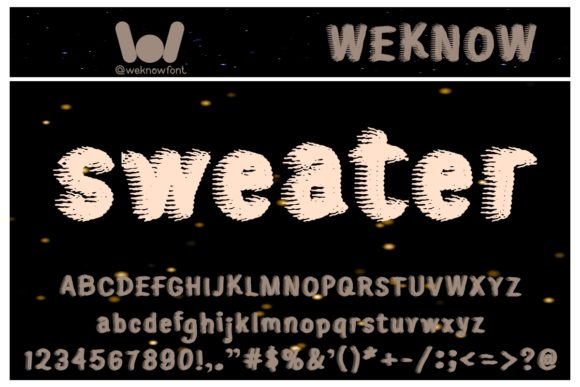
At its core, Sweater is a display font designed to make an impression. It features letterforms with subtle irregularities and organic shapes that suggest something handmade rather than mechanically produced. This gives it an authenticity that resonates with audiences who are tired of sterile, corporate-looking typography. The characters have enough personality to stand on their own as headline text, yet they maintain a cohesion that keeps them from feeling chaotic when used together.
The font family includes multiple styles, which is worth exploring before you commit to a project. Different weights and variations allow you to create visual hierarchy within your designs—using a bolder style for primary headlines and a lighter variation for supporting text. This kind of built-in flexibility means you can maintain a consistent typographic voice across an entire brand identity without needing to pull in additional typefaces.
Where Sweater Truly Shines: Real-World Applications
Let's talk about where this typeface actually works well, because knowing the right context for a font is just as important as liking how it looks.
Branding and Logo Design — If you're building a brand that wants to feel warm, creative, and approachable, Sweater deserves a serious look. Think artisan bakeries, boutique clothing lines, independent bookshops, or wellness brands. The font's personality communicates craftsmanship and care without you having to say a word. For logo design specifically, it creates an immediate emotional connection that more generic typefaces struggle to achieve.
Packaging and Merchandise — Physical products benefit enormously from typography that feels tactile. Sweater works beautifully on product labels, shopping bags, stickers, and branded merchandise like tote bags or mugs. When a customer picks up your product and the typography already feels like it belongs in their hands, you've won a subtle but important battle for their attention.
Social Media and Digital Content — Standing out in a crowded feed requires visual distinctiveness. Sweater brings enough character to stop the scroll, whether you're creating Instagram graphics, YouTube thumbnails, Pinterest pins, or story templates. Its display nature means it reads well at larger sizes, which is exactly how most social media typography functions—big, bold, and impossible to ignore.
Print Materials and Editorial Layouts — Posters, event invitations, magazine headers, and editorial layouts all benefit from a display font with personality. Sweater adds visual interest to layouts that might otherwise feel flat, giving designers a tool for creating focal points and drawing the reader's eye to key information.
Pairing Sweater with Other Fonts
One of the most practical skills in typography is knowing how to combine typefaces. A display font like Sweater works best when paired with something more restrained for body text. Here's the logic: your headline font grabs attention, and your supporting font delivers information clearly without competing for the spotlight.
Consider pairing Sweater with a clean sans serif font for digital projects. The contrast between the organic, textured display type and the geometric precision of a modern sans serif creates visual tension that feels intentional and professional. For print projects with a more traditional feel, a simple serif font can complement Sweater's warmth while maintaining excellent readability for longer passages of text.
The key principle is contrast without conflict. You want your font pairing to feel like a conversation between two distinct voices, not two people shouting over each other. Test your combinations by setting actual content—not just the alphabet—and evaluating how the fonts interact at the sizes you'll actually use.
Practical Tips for Getting the Most from This Typeface
Before you dive into your next project with Sweater, keep a few practical considerations in mind:
- Size matters. Display fonts are designed for larger applications. Use Sweater for headlines, titles, and featured text rather than body copy. At small sizes, the details that make it special can become muddy or illegible.
- Spacing and alignment deserve attention. Because Sweater has organic, slightly irregular letterforms, you may need to adjust letter spacing or kerning more carefully than you would with a geometric sans serif. Take the time to fine-tune these details—they make a noticeable difference in the final result.
- Review the full character set. Many designers discover useful alternates, ligatures, or special characters only after they've finished a project. Spend a few minutes exploring everything the font offers before you start designing.
- Check your licensing. If you're using Sweater for commercial work—and most of us are—make sure you understand the license terms. A premium font with clear commercial licensing protects both you and your clients, and it supports the designers who create these tools.
- Test across contexts. A font that looks perfect on your desktop screen might render differently on a mobile device or in print. Always preview your work in the medium where your audience will actually experience it.
Building a Brand Identity with Intentional Typography
Typography is one of the most powerful tools in your branding toolkit, yet it's often treated as an afterthought. The fonts you choose communicate your brand's personality before anyone reads a single word of your copy. Sweater, with its warmth and character, positions your brand as creative, human, and approachable—which is exactly what many audiences are looking for in a market saturated with polished, impersonal design.
When you select a typeface like Sweater for your brand identity, you're making a deliberate choice about how people will feel when they encounter your work. That emotional response drives engagement, builds recognition, and ultimately helps your audience remember you. Pair it thoughtfully, use it consistently, and let it do the heavy lifting of making your visual communication feel cohesive and intentional.
Whether you're a solo entrepreneur designing your own materials or a professional designer building a brand system for a client, having a creative font like Sweater in your design assets gives you a reliable way to inject personality into any project. It's the kind of typeface that makes people pause, look closer, and feel something—and that's exactly what good typography should do.