Medusa Gothic: A Font with Character for Bold Designs
There are fonts that sit quietly in the background, doing their job without fuss. And then there are typefaces that step into the spotlight, commanding attention with every curve and serif. Medusa Gothic belongs firmly in the second category. This Romanesque serif display font isn't designed to whisper—it's built to make a statement, whether that's on a book cover, a billboard, or the logo for your next creative venture.
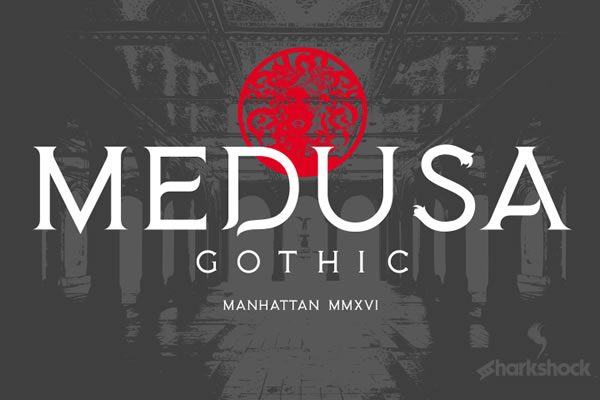
What immediately catches the eye are the subtle, leaf-like ornaments that curl around the ends of the lowercase C, J, and S. These aren't flashy or overdone; they're curious little details that give the typeface a distinct personality. If you prefer a cleaner look, switching to all caps ditches those organic flourishes entirely, offering a more classic Roman aesthetic. It's a small choice that gives you surprising versatility within a single font family.
Where This Typeface Truly Shines
Medusa Gothic was conceived as a display font, meaning it thrives in situations where text needs to be seen from a distance or needs to carry significant visual weight. Think about the projects where typography does the heavy lifting: the title on a fantasy novel, the name of a craft brewery on a bottle label, the headline on a movie poster, or the wordmark for an artisan coffee brand. In these contexts, a generic sans serif often fades into the noise. A font like Medusa Gothic, with its undulating glyphs and light weight combined with generous kerning, absorbs horizontal space and creates a memorable visual anchor.
Consider its application in brand identity. For a small business selling handmade goods, a logo set in Medusa Gothic could evoke a sense of timeless craftsmanship with a hint of the mystical. For a tech startup, the same font might suggest innovation rooted in classical principles. The key is that its visual character—those Romanesque foundations blended with organic curves—provides a narrative starting point. It doesn't just spell out a name; it begins to tell a story.
Practical Uses Beyond the Logo
While logo design is a natural fit, the utility of a premium font like this extends across numerous creative and commercial projects. Here’s where designers and entrepreneurs can put it to work:
- Packaging Design: On a shelf crowded with products, a distinctive typeface can be the difference between a second glance and being overlooked. Medusa Gothic's unique letterforms are perfect for product names on labels for everything from cosmetics to gourmet foods.
- Editorial and Print Layouts: Use it for chapter titles in a book, pull quotes in a magazine, or the masthead of a boutique publication. Its readability at large sizes makes it ideal for these editorial design applications.
- Posters and Event Invitations: Planning a gallery opening, a music festival, or a themed party? The font's dramatic presence sets the tone immediately, conveying the event's mood before a single word of body copy is read.
- Digital Products and Marketing Assets: From the title graphics on a YouTube video to the header on a landing page, using a consistent, striking font helps build visual consistency across all your marketing assets. It makes your content instantly recognizable in a crowded social feed.
- Merchandise: T-shirts, tote bags, and mugs thrive on bold, simple graphics. A powerful wordmark set in Medusa Gothic can become the centerpiece of a successful merch line.
Making It Work: Pairing and Practicality
Introducing a display font with this much personality requires a thoughtful approach. You wouldn't use it for a paragraph of body text—its design for titles and logos means it's optimized for impact at larger sizes, not for dense reading. The font file itself includes basic and extended Latin character sets, kerning, and limited punctuation, so you'll want to ensure you have the necessary symbols for your project before you begin.
The real magic happens in the font pairing. Medusa Gothic's ornamental details and Romanesque weight pair beautifully with clean, neutral typefaces. Try combining it with a simple sans serif for body copy. The contrast allows the display font to stand out while ensuring the overall design remains balanced and legible. For a more classic or luxurious feel, it can also sit alongside a refined serif font, creating a harmonious hierarchy that feels both traditional and fresh.
Before finalizing any project, always test your typography in context. View the mockup at the actual size it will be seen—whether that's on a mobile screen or a printed poster. Check the spacing (the liberal kerning is a feature, not a bug) and ensure the text remains clear and commanding. If you're working on a commercial project, double-check the licensing of this commercial font to ensure it covers your intended use, whether for a client's logo or a run of printed merchandise.
Ultimately, choosing a typeface is a strategic decision. It's not just about what looks cool in a font preview; it's about finding a visual voice that aligns with your project's goals and speaks to your audience. Medusa Gothic offers a voice that is both classic and curious, structured yet organic—a combination that can help a brand or a creative project achieve that elusive quality of being both professional and utterly unique. It’s a design asset that doesn’t just fill space but actively shapes perception.