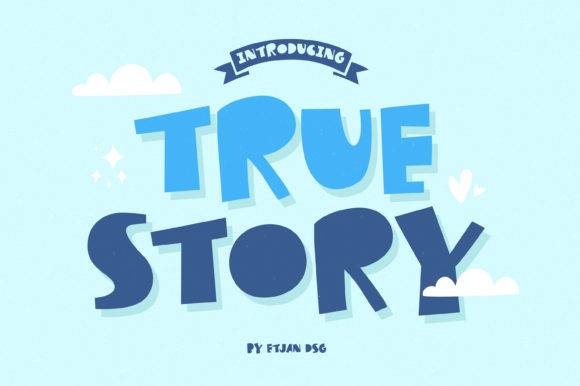
True Story: The Display Font That Brings Authenticity to Your Designs
Every creative project has a story to tell. Whether you’re designing a birthday invitation, building a brand for a local bakery, or crafting social media posts for a kids’ clothing line, the typography you choose sets the tone before a single word is read. True Story is a display font that leans into that idea—it’s friendly, approachable, and carries a sense of genuine warmth that’s hard to fake with more formal typefaces. If you’ve been searching for a font that feels honest and inviting without sacrificing style, this one deserves a closer look.
A Typeface With Personality You Can Actually Use
True Story isn’t trying to be everything. It knows exactly what it is: a playful, chunky-lettered display font designed for projects that need to feel approachable and fun. The rounded edges and slightly irregular letterforms give it a hand-crafted quality, like someone took the time to write each letter with care. That authenticity matters, especially when you’re working on projects aimed at families, children, or audiences who respond to warmth over polish.
What makes it visually appealing isn’t just the shape of the letters—it’s the energy they carry. The bold weight ensures visibility, while the soft curves keep it from feeling aggressive or loud. It strikes a balance that works well across a surprising range of applications, from playful branding to educational materials. If you’ve ever struggled to find a font that feels genuine without looking amateurish, True Story solves that problem elegantly.
Where This Font Truly Shines
Let’s talk about practical applications, because a font is only as good as the projects it supports. True Story works beautifully in contexts where you want to communicate joy, creativity, and trustworthiness. Here are some specific ways you can put it to work:
- Children’s branding and logos: If you’re launching a daycare, a kids’ activity center, or a children’s book series, this font immediately signals that your brand is welcoming and safe. It’s the kind of typeface parents respond to instinctively.
- Packaging design: Think about snack brands targeting families, craft kits for kids, or handmade goods sold at local markets. True Story adds a handmade, trustworthy quality to labels and boxes that helps products stand out on crowded shelves.
- Social media graphics: Instagram posts, Pinterest pins, and Facebook ads all benefit from bold, readable typography. The chunky letterforms in True Story grab attention in fast-scrolling feeds, especially when paired with bright colors or playful illustrations.
- Invitations and event materials: Birthday parties, school fundraisers, community events—any occasion that calls for a cheerful, informal tone gets an instant boost from this typeface.
- Blog headers and website accents: While you wouldn’t set an entire blog post in a display font, using True Story for headings, pull quotes, or call-to-action buttons adds personality without overwhelming the design.
- Merchandise and print-on-demand: T-shirts, tote bags, mugs, and stickers aimed at younger audiences or playful markets look great with a font that doesn’t take itself too seriously.
- Educational materials: Worksheets, classroom posters, and learning resources benefit from typography that feels encouraging rather than intimidating. True Story makes learning materials feel approachable.
Building a Brand Identity That Feels Real
One of the biggest challenges in branding is consistency. You want every touchpoint—from your website to your business card to your Instagram stories—to feel like it belongs to the same family. Choosing a primary display font like True Story gives you a visual anchor. When people see those distinctive, friendly letterforms repeated across your materials, they start to associate that look with your brand. That’s how recognition is built, not through a single logo, but through a consistent visual language.
For small business owners, especially those in creative or family-oriented industries, this kind of typographic consistency is a practical shortcut to looking professional. You don’t need a massive budget or a design agency to create materials that feel cohesive. You need a typeface that works across contexts and a willingness to use it deliberately.
Pairing True Story With Other Fonts
Display fonts are designed to stand out, which means they work best in headlines, titles, and short bursts of text. For body copy, you’ll want something more subdued. Here are a few pairing strategies that work well:
- With a clean sans serif: Fonts like Open Sans, Lato, or Montserrat provide a neutral backdrop that lets True Story do the talking. This combination works well for websites and digital materials where readability at smaller sizes is essential.
- With a simple serif: If your project leans slightly more traditional—think editorial layouts or boutique branding—pairing True Story with a classic serif like Lora or Merriweather creates an interesting contrast between playful and refined.
- With a minimal script: For invitations or decorative projects, a light script font used sparingly alongside True Story can add elegance without competing for attention.
The key is restraint. Let True Story handle the moments where personality matters most, and use your secondary font for everything else. This approach keeps your designs balanced and ensures the display font remains impactful rather than exhausting.
Readability and Practical Considerations
Any honest conversation about display fonts needs to address readability. True Story is designed for larger sizes—think headlines, banners, and signage. At small sizes, the chunky letterforms can lose clarity, especially in dense paragraphs. This isn’t a flaw; it’s simply how display fonts work. Use them where they’re meant to be used, and they’ll serve you well.
Before committing to any font for a project, test it in context. Set your actual text, not just the alphabet, and view it at the size it will appear in the final design. Check how it looks on different screens if you’re designing for digital, or print a sample if the project is physical. These small steps save you from discovering problems after you’ve already invested time in a layout.
Also worth noting: if True Story comes with multiple styles or weights, explore them. Sometimes a slightly different version offers better contrast or spacing for your specific needs. Good font families give you options, and using those options thoughtfully is part of what separates polished design from guesswork.
Licensing and Commercial Use
If you’re planning to use True Story for client work, merchandise, or any commercial application, make sure you understand the licensing terms. Most premium fonts come with clear guidelines about how many users or devices can install the font, whether it can be embedded in digital products, and what counts as commercial use. Respecting these terms isn’t just legal compliance—it’s professional integrity. If you’re ever unsure, reach out to the font creator or foundry. Most are happy to clarify.
Why Honest Typography Matters
In a world full of overdesigned visuals and fonts that try too hard to be trendy, there’s something refreshing about a typeface that simply wants to be friendly. True Story doesn’t pretend to be edgy or ultra-modern. It embraces its playful, approachable nature and delivers on that promise consistently. For designers, business owners, and creators who value authenticity in their visual communication, that honesty is worth more than any trendy aesthetic.
The best design choices aren’t always the boldest or the most expensive. Sometimes they’re the most fitting. If your project calls for warmth, playfulness, and a touch of hand-crafted charm, True Story might just be the right font for the job. Try it out, pair it thoughtfully, and see how it transforms the feel of your work.